

Los recientes datos de la encuesta Encuesta Nacional de Ingresos y Gastos de los Hogares (ENIGH) han sido ya materia de diversos análisis sobre la mejora en los ingresos de los mexicanos en donde en general, es difícil regatear al gobierno dicho mérito (dejando aparte la polémica sobre los ingresos por transferencias públicas que dan para otro análisis). En concreto hoy, los mexicanos y las mexicanas tienen mejores ingresos con la cuarta transformación.
Pero hay un ángulo interesante que nos parece, poco abordado a partir de la citada encuesta bianual y es el relativo a un síntoma, del mercado laboral mexicano, nos referimos a la penalización en el trabajo remunerado de la mujer y su maternidad; ante un problema tan persistente como éste, quizá habremos de pensar que hay algún error de planteamiento; van algunos datos interesantes:
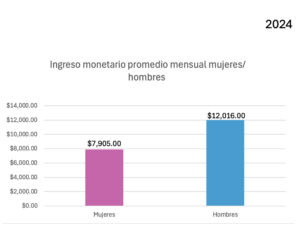
El ingreso monetario promedio mensual de los hombres es cuatro mil pesos mayor al de mujeres; en otras palabras, las mujeres tienen un ingreso monetario mensual 52% menor que el de los hombres.
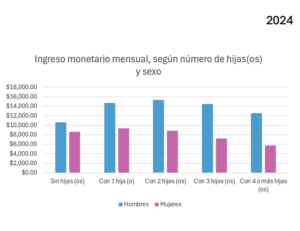
Segundo dato: la maternidad incide en el ingreso monetario femenino; al principio para bien conforme llegan más hijos empeora. Este comportamiento estadístico invita a muchas lecturas y reflexiones: según la ENIGH una mujer que tiene un hijo recibe un mejor ingreso que la que no tiene hijos; la madre con un solo hijo recibe un ingreso mensual de $9,342 pesos contra 8,619 de la mujer sin hijos, pero a partir del segundo hijo el ingreso inicia con un descenso del 5% y si llega a cuatro hijos… ¡percibirá un ingreso mensual 40% inferior que si no tuviera descendencia!
Tercer dato; los hombres con dos hijos (dos hijos es la media nacional) son lo que en promedio perciben mayor ingreso monetario con casi 16 mil pesos mensuales.
Es una tentación casi irresistible, correr a lugares comunes cuando estos tres datos se evalúan de forma superficial, refugiándonos en la discriminación laboral para explicar la brecha salarial entre hombres y mujeres; sin embargo, el problema viene de otra parte y hay tres razones un poco más profundas para orientarnos en porque ellas, aunque facturan, lo hacen en menor cantidad: las mujeres son más en los empleos peor pagados, trabajan menos horas y tienen menos continuidad en la carrera profesional.
Fotos: ONU, Elaboración Propia
En inglés:
Women Bill… With Disadvantage?
The most recent data from the Natinal Household Income and Expenditure Survey (ENIGH in Spanish) has already been the subject of several analysis regarding the improvement in Mexican incomes. Generally speaking, it is hard to deny the government credit for this achievement (setting aside the ongoing debate over public transfer income, which warrants a separate discussion). As a matter of fact, both mexican men and women are earning more under the Fourth Transformation political movement.
However, there is one angle that seems to have received little attention from this biannual survey which is a structural symptom of the Mexican labor market – namely, the penalty placed on paid work for women, particularly regarding mothergood. Given how persistent this problem is, perhaps we should consider whether we are framing this issue incorrectly. Here are some compelling data points:
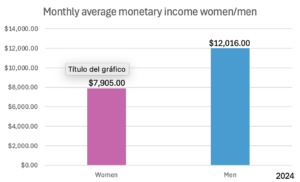
The average monthly monetary income of men is 4,000 pesos higher than that of women; in other words, women earn 52% less than men on average.
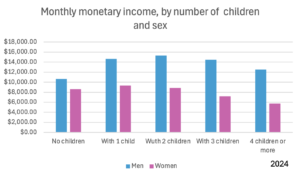
Motherhood affects women’s income: at first positively, but it declines with each additional child. According to ENIGH, a woman with one child earns more than one with none—$9,342 MXN per month versus $8,619. But from the second child onward, her income decreases by 5%, and if she has four children, her monthly income will be 40% lower than if she had none.
Men with two children (the national average) have the highest monetary income, earning nearly 16,000 MXN per month.
It’s almost irresistible jumping to general explanations and conclusions when evaluating these three facts superficially—discrimination in the workplace is often cited as the cause of the gender wage gap. But the root of the problem may lie elsewhere, and three deeper reasons help explain why women, even if they get paid, do so in smaller amounts: they are overrepresented in lower-paying jobs, work fewer paid hours, and experience more career interruptions.
Regarding the first point, the overrepresentation of women in low-paid roles stems from a labor market—and employers—that push women into certain professions or positions deemed more compatible with domestic responsibilities, which are often poorly paid. The numerous labor reforms passed in the current and previous administrations should take these INEGI figures seriously and legislate responsibly on issues like paternity leave, care policies, and salary transparency—measures that could help address these gaps and correct the inconsistencies of a labor market that remains not only unequal, but also precarious and informal.
As for women working fewer hours, it’s important to clarify that this refers to fewer hours of paid work. According to INEGI’s most recent National Survey on Time Use (ENUT) from 2019, women in Mexico devote 68% of their time to unpaid labor, while men spend just 25% of their time on such activities.
So what would a balanced scenario look like? The most detailed global data comes from the Organisation for Economic Cooperation and Development (OECD), which in its Employment Outlook report states that the average gender pay gap across member countries stands at 20% in favor of men. In early 2018, Iceland—ranked the most gender-equal country in the world—and Germany (which has a gender pay gap above the European average) passed laws requiring public salary disclosure for men and women. However, while greater transparency can help compare wages, it doesn’t automatically close the gender pay gap.

 Agregar a favoritos