
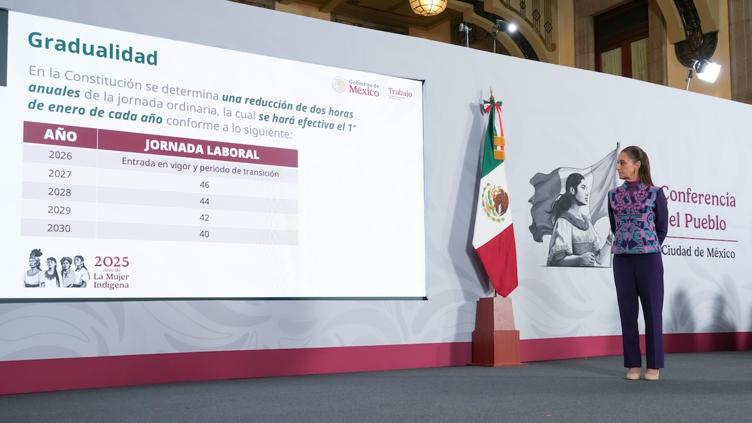
El día de hoy, se publicó en el Diario Oficial de la Federación el decreto por el que se reforman, adicionan y derogan diversas disposiciones de la Ley Federal del Trabajo en materia de reducción de la jornada laboral.
En el marco del Día del Trabajo, este 1 de mayo marca un parteaguas en el modelo laboral mexicano. Tras su aprobación en el Congreso y la reciente publicación de la reforma a la Ley Federal del Trabajo en el Diario Oficial de la Federación (DOF), entraron en vigor las disposiciones secundarias que darán forma a la implementación de la jornada laboral de 40 horas semanales en el país.
La reforma, que deriva de la modificación constitucional al artículo 123, establece no solo la reducción progresiva de la jornada laboral, sino también un nuevo marco operativo que obligará a empresas y empleadores a replantear sus esquemas de contratación, control y cumplimiento.
Aunque la reducción total a 40 horas no será inmediata, la entrada en vigor de la legislación secundaria activa desde hoy las reglas del juego. A partir de este 1 de mayo, las empresas deberán iniciar un proceso formal de adaptación que culminará en 2030.
Nuevos modelos de cumplimiento laboral
Con la reforma ya vigente en la ley secundaria, uno de los cambios más relevantes es la formalización de mecanismos de control laboral. A partir de hoy, las empresas deberán:
- Registrar de manera obligatoria la jornada laboral, mediante sistemas verificables.
- Ajustar contratos individuales y colectivos, alineándolos a las nuevas disposiciones.
- Garantizar el respeto a los límites de horas extraordinarias, evitando abusos o simulaciones.
- Mantener intactos salarios y prestaciones, pese a la reducción de horas.
Estas medidas representan un giro hacia esquemas más estructurados de gestión laboral, donde la trazabilidad y la medición se vuelven centrales.
La entrada en vigor de esta reforma posiciona a México en línea con tendencias internacionales que priorizan el bienestar laboral sin sacrificar productividad. Sin embargo, también abre una nueva etapa en la que el reto principal será la correcta implementación.
Hoy, 1 de mayo, no solo se conmemora el trabajo: inicia una transformación estructural en la forma en que se organiza, mide y regula el tiempo laboral en el país. Para las empresas, el mensaje es claro: adaptarse ya no es opcional, es una obligación legal.
*English version
Official Gazette of the Federation publishes historic reform: the reduction of the working day begins in Mexico
Today, the decree reforming, adding to, and repealing various provisions of the Federal Labor Law regarding the reduction of the workweek was published in the Official Gazette of the Federation.
On Labor Day, this May 1st marks a turning point in the Mexican labor model. Following its approval in Congress and the recent publication of the reform to the Federal Labor Law in the Official Gazette of the Federation (DOF), the secondary provisions that will shape the implementation of the 40-hour workweek in the country have entered into force.
The reform, which stems from the constitutional amendment to Article 123, establishes not only the progressive reduction of the workweek but also a new operational framework that will require companies and employers to rethink their hiring, monitoring, and compliance practices.
Although the complete reduction to 40 hours will not be immediate, the entry into force of the secondary legislation activates the rules of the game starting today. Starting May 1st, companies must begin a formal adaptation process that will culminate in 2030.
New Labor Compliance Models
With the reform now in effect in the secondary legislation, one of the most significant changes is the formalization of labor control mechanisms. From today, companies must:
Mandatorily register working hours through verifiable systems.
Adjust individual and collective bargaining agreements, aligning them with the new provisions.
Guarantee respect for overtime limits, preventing abuses or misrepresentations.
Maintain salaries and benefits intact, despite the reduction in hours.
These measures represent a shift towards more structured labor management schemes, where traceability and measurement become central.
The implementation of this reform positions Mexico in line with international trends that prioritize employee well-being without sacrificing productivity. However, it also opens a new chapter in which the main challenge will be proper implementation.
Today, May 1st, is not just a day to commemorate work: it marks the beginning of a structural transformation in how working time is organized, measured, and regulated in the country. For businesses, the message is clear: adapting is no longer optional; it’s a legal obligation.

 Agregar a favoritos